October 20, 2026
Instantly Alternatives: 10 Cold-Email Tools Compared
Stop shopping for a cheaper Instantly clone. That's the popular advice, and it's usually wrong. Teams searching for Instantly alternatives don't have a sending tool problem. They have an operating model problem, and swapping dashboards won't fix a weak list, sloppy authentication, or nobody owning replies.
You're probably in one of three camps. You're an agency operator juggling client inboxes, domains, and reporting. You're a SaaS founder who wants pipeline without becoming a part time deliverability engineer. Or you're a revenue team that needs prospecting, sequencing, and handoffs to work inside a bigger system. The right pick changes completely depending on which camp you're in.
So judge every option below on three questions. Who runs the campaign day to day? Who owns deliverability when placement drops? And what's the fully loaded cost per qualified meeting, not just the subscription?
That last question matters more now. Reported cold email reply rates have fallen from about 8.5% in 2019 to roughly 5% in 2025 and 3.43% in 2026, so buying more sending capacity won't restore old results. Pick the model you can operate. Then pick the tool.
Table of Contents
- 1. Smartlead
- 2. Saleshandy
- 3. lemlist
- 4. Apollo.io
- 5. Reply.io
- 6. Woodpecker
- 7. QuickMail
- 8. Mailshake
- 9. Snov.io
- 10. Ever Outbound
- Top 10 Instantly Alternatives: Feature Comparison
- Pick the Stack That Matches Your Operating Model
1. Smartlead
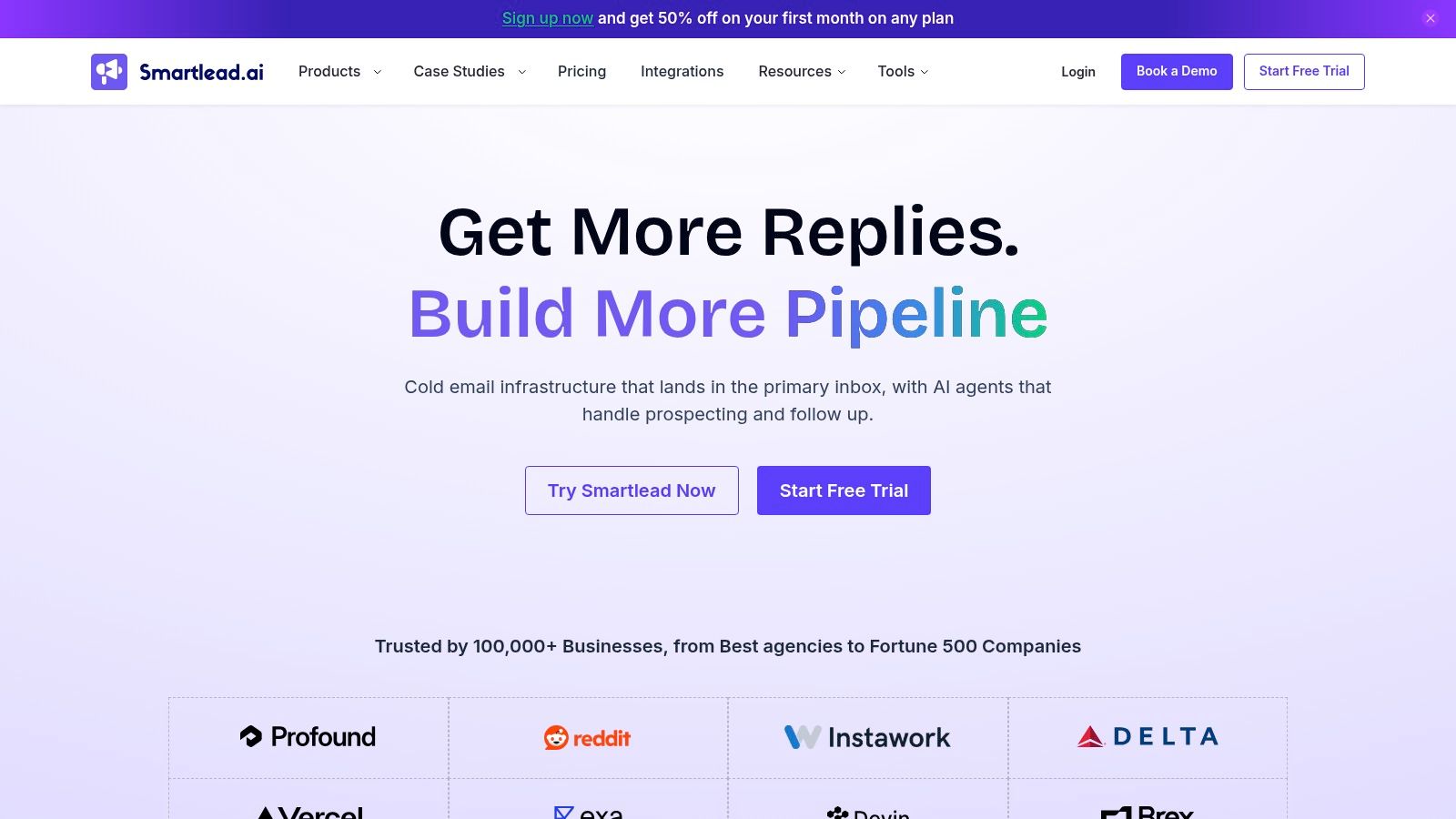
If you're running many inboxes across clients, start here. Smartlead is built for high volume email operations, not for being your entire sales stack. That's a strength if you already know what you're doing, and a trap if you don't.
Who Should Run It
Agency operators and experienced outbound leads fit best. You get unlimited email accounts, automated warm up, deliverability features, agency workspaces, and API capabilities. Flat fee plans also make budgeting cleaner when you're managing multiple campaigns at once.
- Best use: Bring your own lead data, strategy, and copy, then use Smartlead as the sending engine.
- Watch out: Lead sourcing and enrichment may require a separate provider, so your real stack cost is higher than the subscription.
- Channel limit: It's primarily email focused, so LinkedIn or calling usually means another tool.
Don't confuse inbox capacity with safe reach. Gmail says bulk senders need SPF, DKIM, and DMARC, and recommends keeping the user reported spam rate below 0.1% and away from 0.3% or higher. If nobody on your team monitors that, Smartlead won't save you. Compare the self managed route carefully in this Smartlead versus managed outbound breakdown.
2. Saleshandy
Saleshandy is my default recommendation for solo founders testing cold email on a tight budget. It folds lead discovery and outreach sequences into one login, so a one person operation avoids paying for two tools and gluing them together.
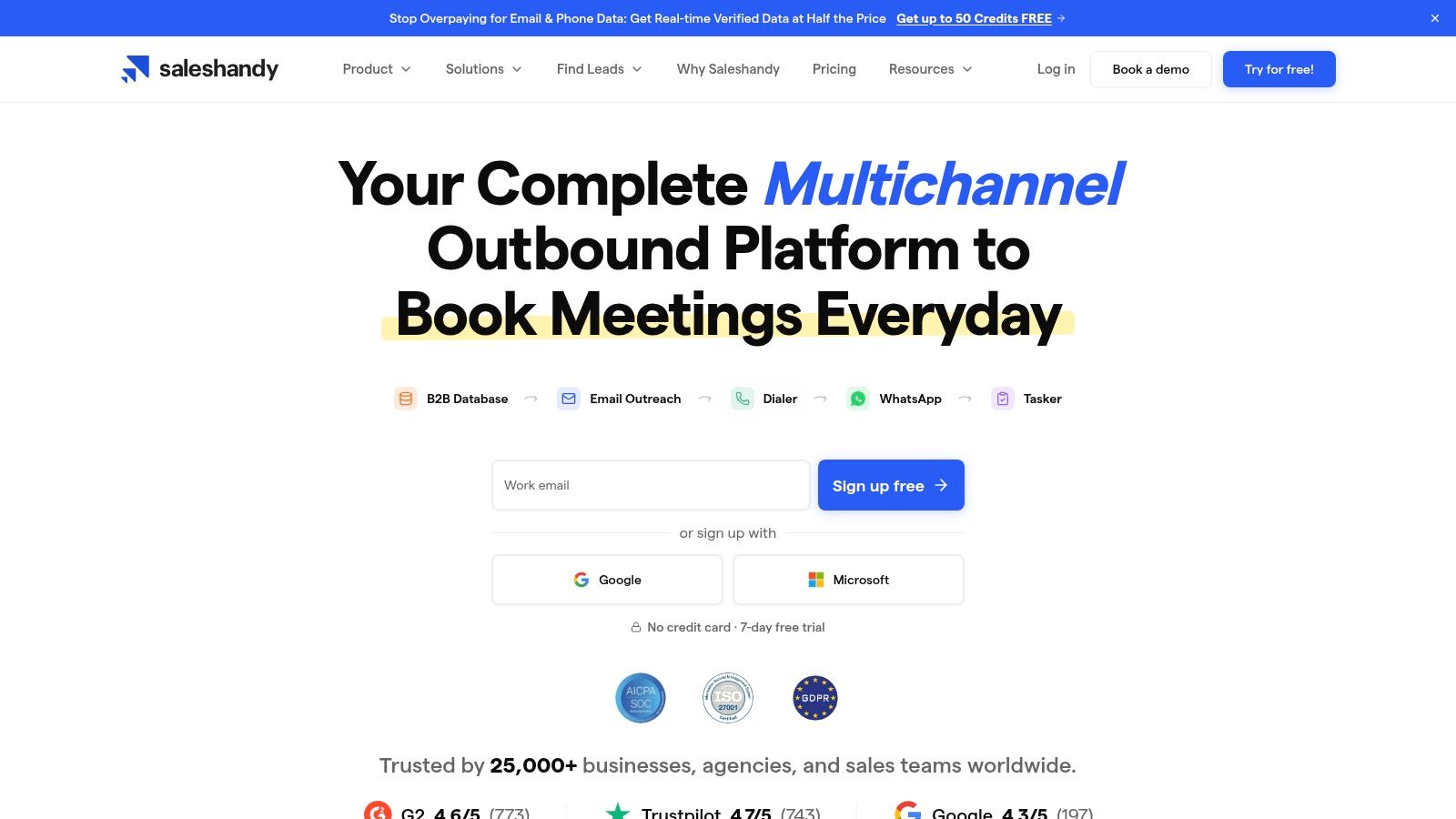
That consolidation earns its keep at low volume. A founder validating an offer finds contacts, builds a sequence, and manages replies in the same place, which means more time shipping campaigns and less time wiring integrations. Higher tiers broaden the outreach features, and the free trial plus public pricing keeps the test cheap.
The catch shows up on the invoice. Credit expiration and renewal policies can burn unused allocation, so judge plans on the sending volume you will run rather than the headline monthly price. Feature gates also mean the starter plan rarely stays adequate once volume climbs.
One thing Saleshandy will not do: make targeting and copy decisions for you. List quality, messaging, and reply handling all stay on your desk.
Pick it when tool count is the problem you are solving. Skip it if you need deeper infrastructure control, because a small agency juggling client domains will hit its ceiling fast.
3. lemlist
Choose lemlist when email alone isn't your motion. It's a multichannel outbound platform with email sequences, deliverability features, a built in lead database, and LinkedIn outreach on the multichannel plan. AI and enrichment features appear in listed plans, and the listed Email plan includes unlimited users.
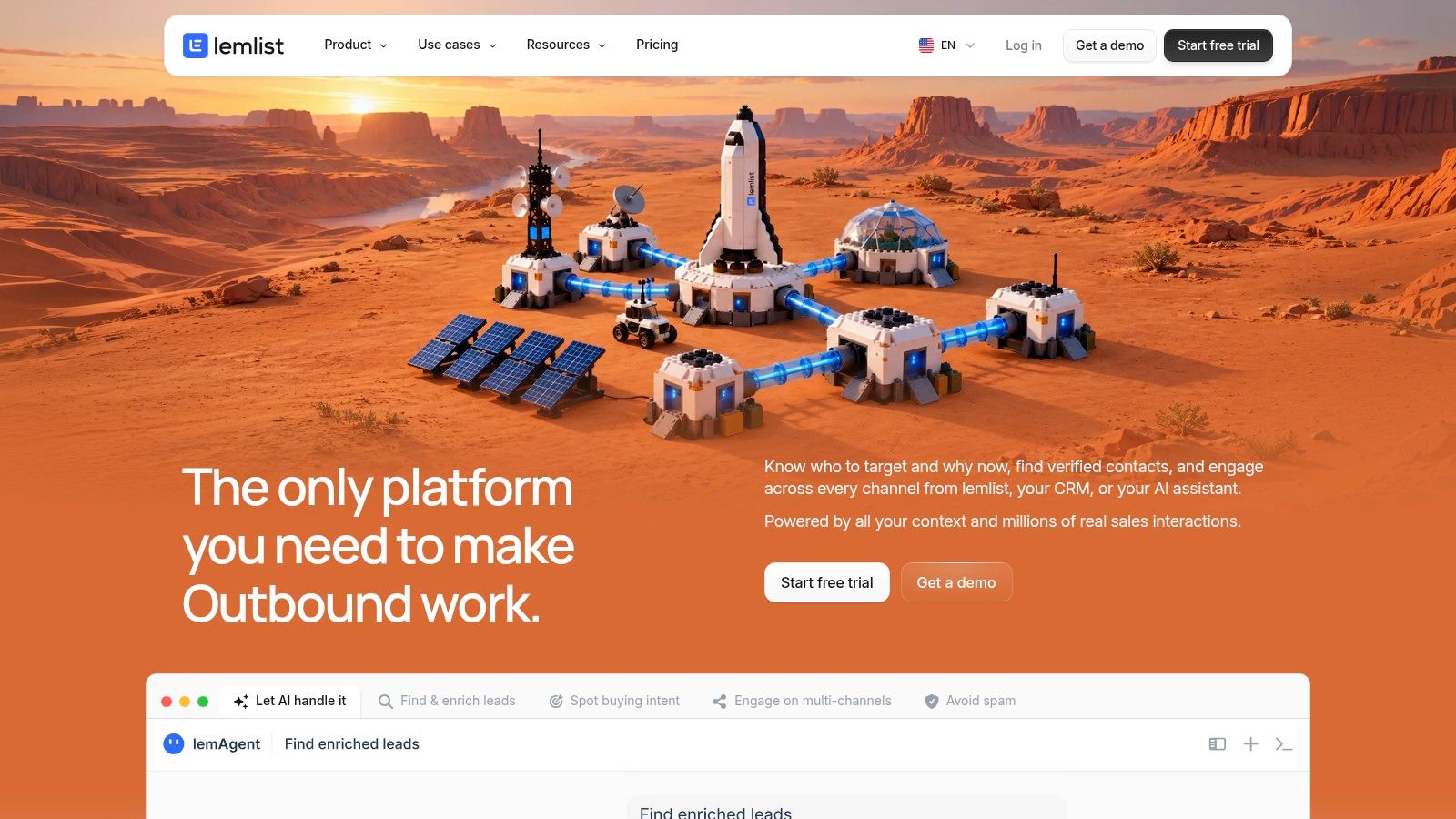
Revenue teams that coordinate touches across channels will get more from lemlist than from a basic sender. Public pricing also makes plan levels easier to compare before you commit. If you're evaluating the European angle, this roundup of sales channel alternatives for Spain is useful extra reading.
Multichannel only helps if someone owns sequencing logic, reply routing, and suppression across every channel.
That ownership includes compliance. Under CAN-SPAM, the FTC requires a working opt out mechanism that can process requests for at least 30 days after sending, with requests honored within 10 business days. lemlist won't make those calls for you, and it isn't a managed service. For a direct contrast, see the lemlist comparison against a managed model.
4. Apollo.io
Pick Apollo when the campaign owner is a solo founder or a small revenue team whose real constraint is finding enough accurate accounts to contact. Apollo.io combines a B2B contact database with sequencing, so search, filters, enrichment, and outreach stay in one workflow.
The review signal cuts both ways. G2 shows Apollo with approximately 9,664 reviews and a 4.7/5 rating, while Instantly posts 4.8/5 across roughly 4,112 reviews. Apollo's larger base implies wider adoption; Instantly's higher score warns that ease of use is still a fair fight.
My recommendation: use Apollo to build and enrich lists, then run a controlled send test before moving budget. Hold segments, copy, mailbox pools, and timing constant so you can tell whether data quality or infrastructure produced the result. Credits and per user pricing can change the economics fast, so model cost at your real send volume rather than the entry plan. If you need managed deliverability rather than more seats and credits, examine the Apollo against a managed outbound model before committing.
5. Reply.io
Reply.io earns its price when a revenue team with defined roles runs it. One rep builds sequences, another works replies, a manager reads the reporting. Hand it to a solo founder and the orchestration becomes shelfware.
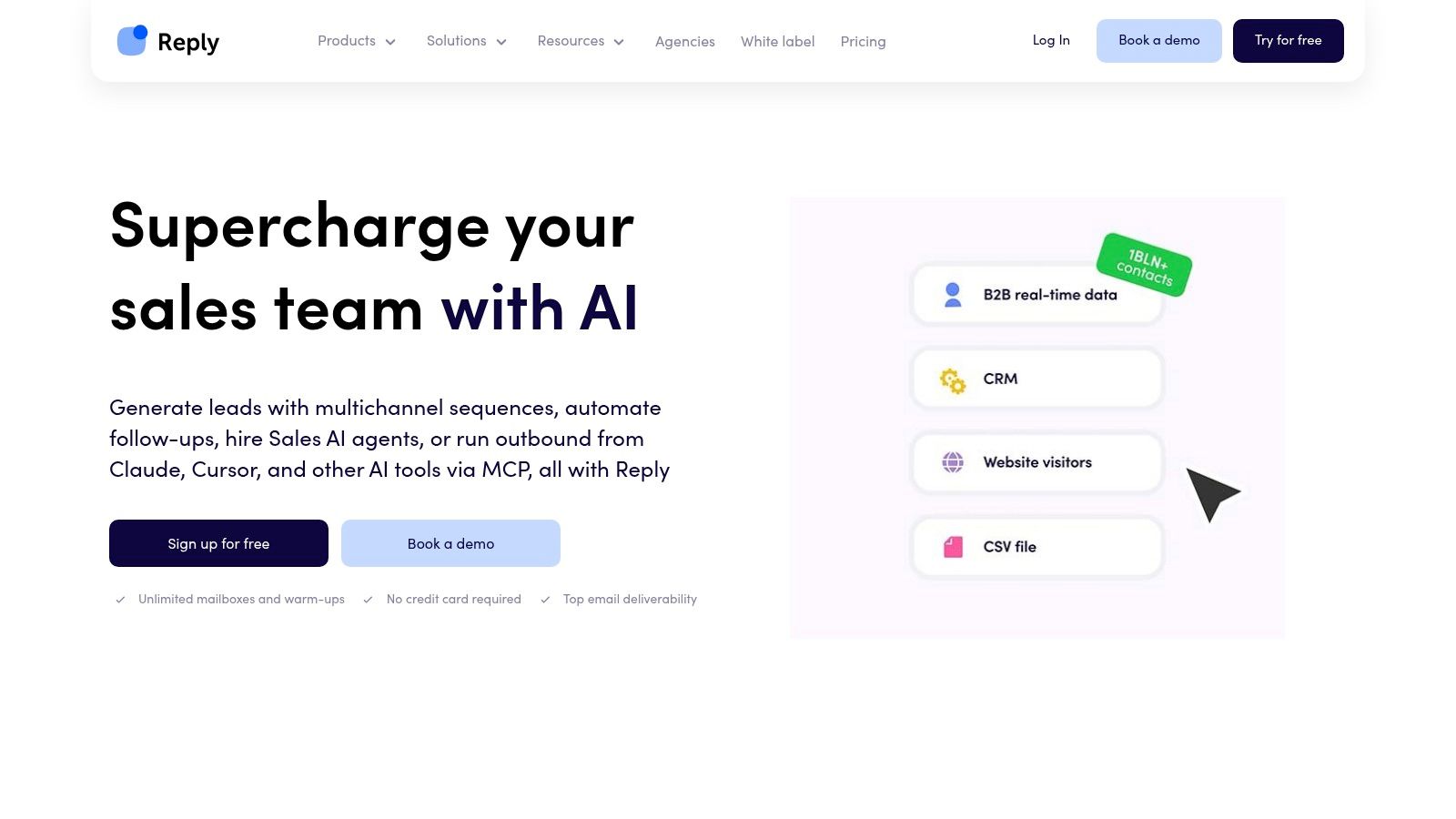
The feature set spans automated sequences, campaign reporting, LinkedIn and call steps on relevant plans, AI personalization and reply handling, plus agency oriented options. That reach has a cost. More channels and more mailboxes mean more authentication to maintain, and Microsoft requires domains sending more than 5,000 emails per day to meet SPF, DKIM, and DMARC compliance, with noncompliant messages risking Junk placement or eventual rejection.
Two cautions before you sign. Pricing shifts by plan and use case, and advanced options may require a sales conversation. Broader functionality also means heavier setup and more process to maintain.
My take: commit to Reply.io if your team will run email, LinkedIn, and calls as one motion. If you'd rather hand campaigns to operators, see how Reply.io compares to a managed outbound model.
6. Woodpecker
A consultant contacting a few hundred prospects a month has different needs than an agency pushing volume. Woodpecker is built for the first one.
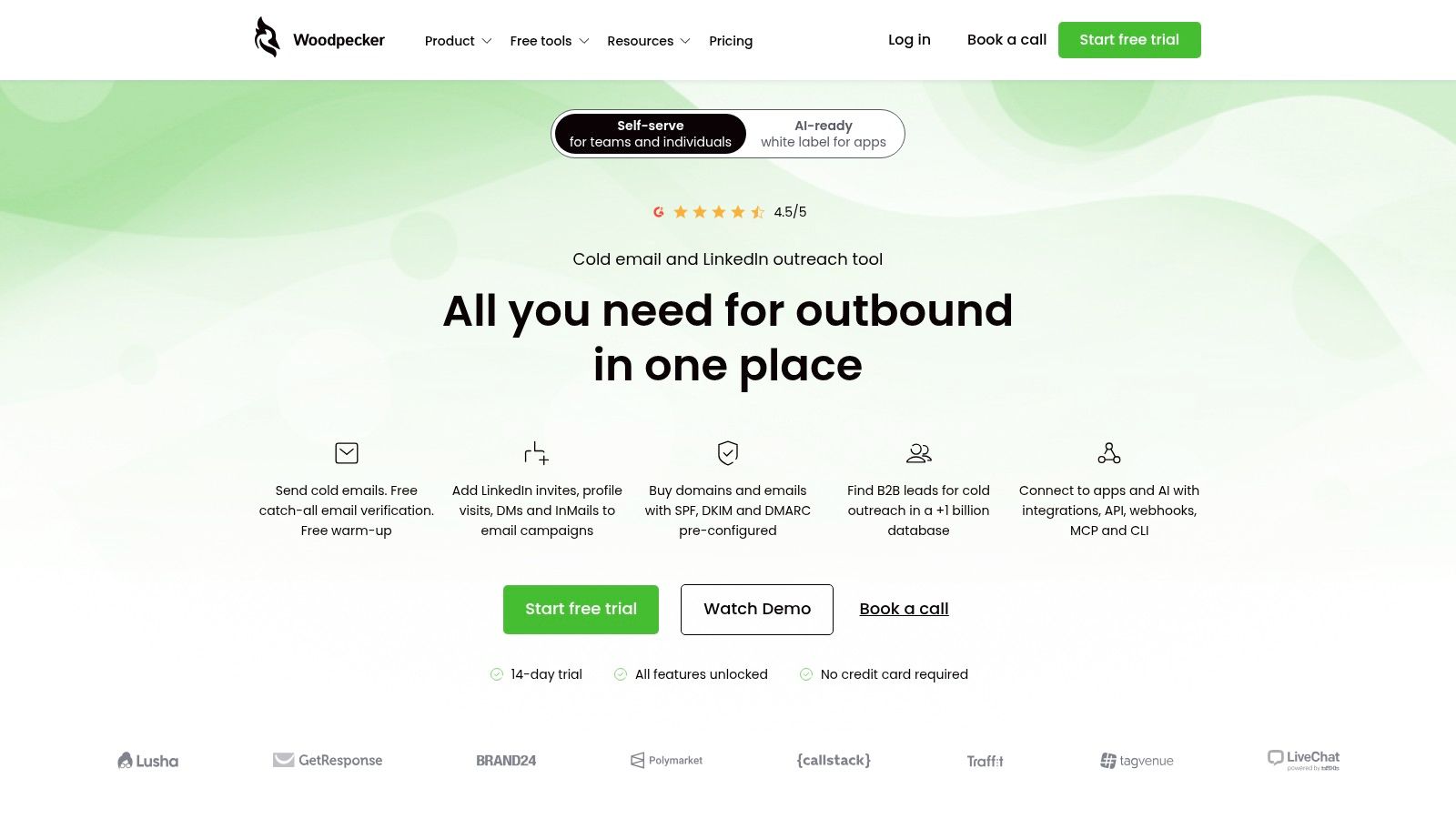
The toolkit stays close to cold email fundamentals: automated sequences and follow ups, a centralized inbox for replies, verification, warm up, and inbox rotation. Plan features list unlimited email accounts and team members, so a small team skips seat math entirely.
Pricing is where the tool makes its real argument. You pay based on contacted prospects, which keeps cost tied to actual outreach rather than mailbox count. Forecast your monthly volume and the model feels honest. Watch it swing wildly and the bill will irritate you, and LinkedIn steps or other extras can add cost on top.
Who runs it best? A founder or consultant doing deliberate, smaller campaigns.
Pick Woodpecker if email is your whole motion and your volume is predictable. There is no campaign team behind the software, so strategy stays on you.
7. QuickMail
Agency operators who need clear workspace separation should look at QuickMail. It offers email and LinkedIn sender management, automated campaigns, a free AutoWarmer with MailFlow, and an agency plan with multiple workspaces. Higher plans add API and webhook support for teams connecting outbound to other systems.
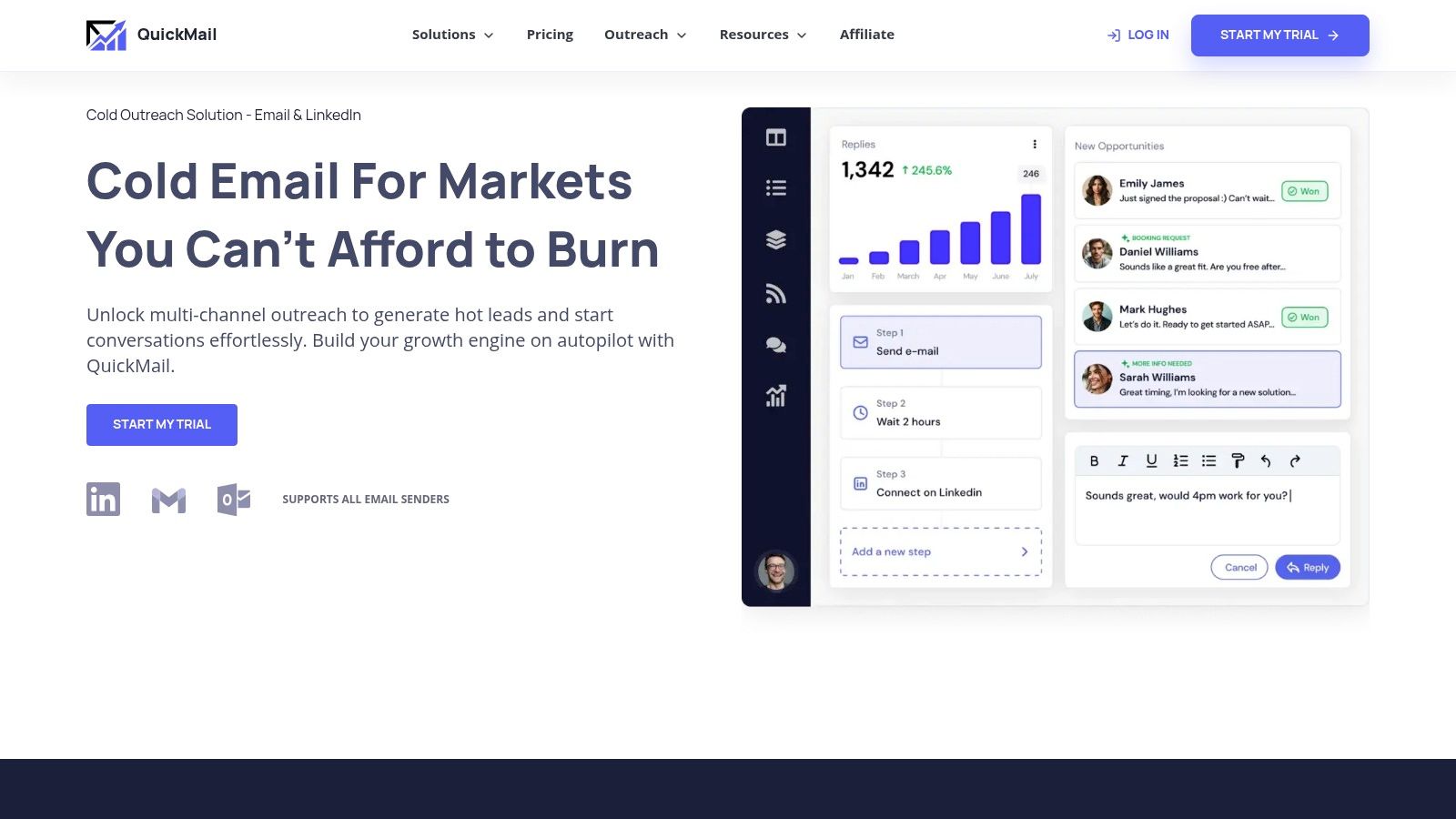
Published plans and a trial make evaluation straightforward. The vendor also says plans can be changed or canceled without a contract. That's useful when client volume changes and you don't want to be trapped in the wrong tier.
Operator rule: Pause a damaged mailbox and diagnose it. Don't hide a reputation problem by adding more mailboxes.
Recovery takes patience. Gmail says bulk senders who lose mitigation eligibility regain it only after the spam rate stays below 0.3% for seven consecutive days. QuickMail gives you structure, but you still own strategy, lead quality, ramps, and those pause decisions. Contact and monthly send caps vary by tier, and extra agency workspaces may cost more, so map client count before buying.
8. Mailshake
Mailshake makes sense for a sales team that wants email automation plus room to add calling and CRM workflows. It includes automated sequences, A/B testing, warm up, and verification. Higher tiers add a power dialer and integrations with Salesforce, Pipedrive, and HubSpot.
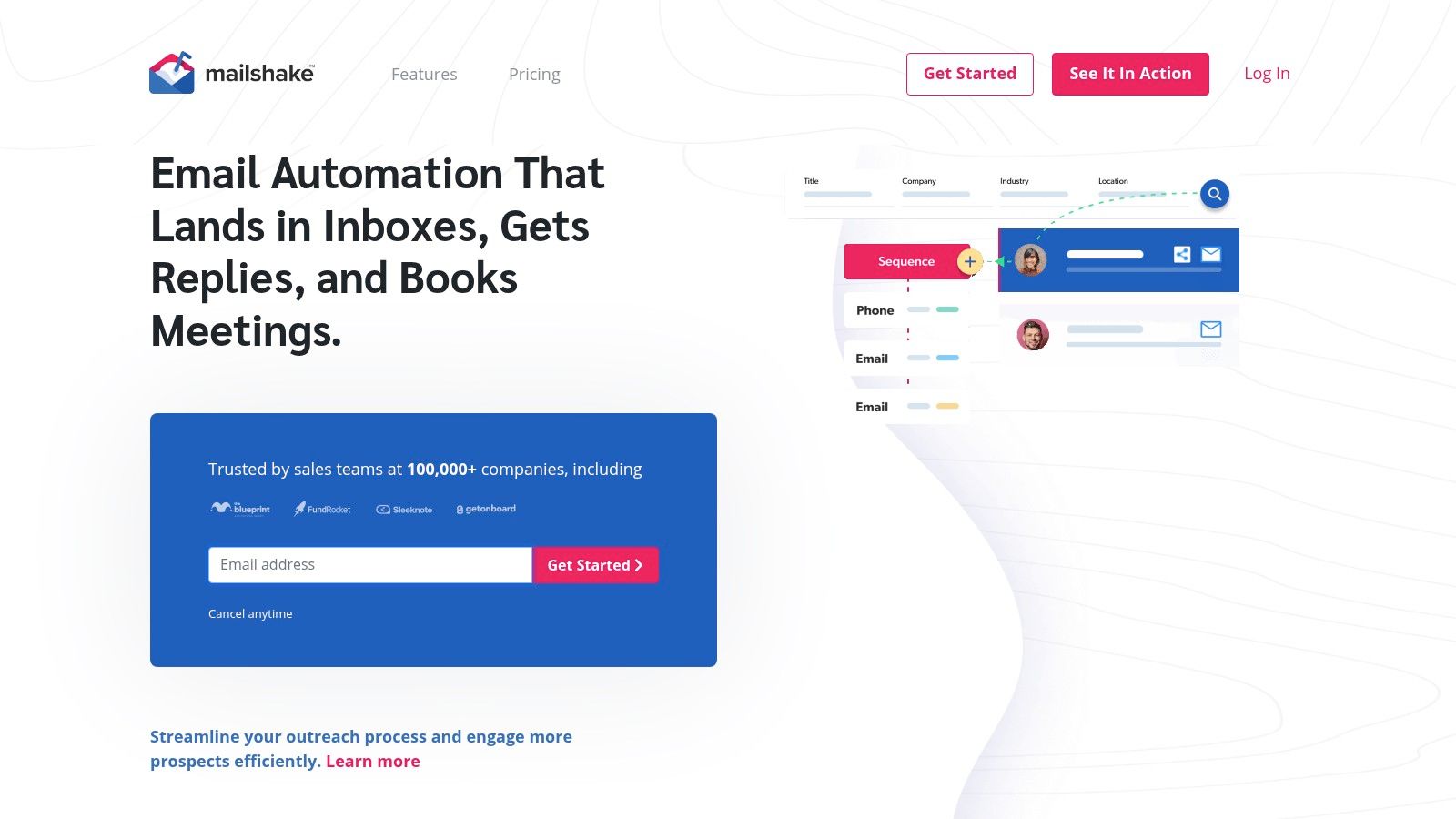
There's also an agency plan with consolidated billing and separate client teams. That matters if finance and client reporting are already painful. A tidy plan structure won't book meetings by itself, but it removes operational friction.
The Trade Off
Mailbox allowance is tied to plan or user count, so this isn't the obvious choice for mailbox heavy cold email operations. The pricing page doesn't list a free trial, which raises the cost of a bad fit. Higher tier calling features are also wasted money for email only teams.
Existing comparisons often miss the deeper issue here. As this deliverability focused review of Instantly alternatives coverage framing highlights, warm up and mailbox features don't explain how to diagnose whether reputation, content, or list quality caused a failure. Mailshake is a solid sales engagement pick. It isn't deliverability accountability in a box.
9. Snov.io
Snov.io is the pick for a solo founder or lean consultant still stitching prospecting together by hand. Email finding, verification, sequences, warm up, and sales management features sit in one workspace. LinkedIn automation exists, priced as a separate add on.
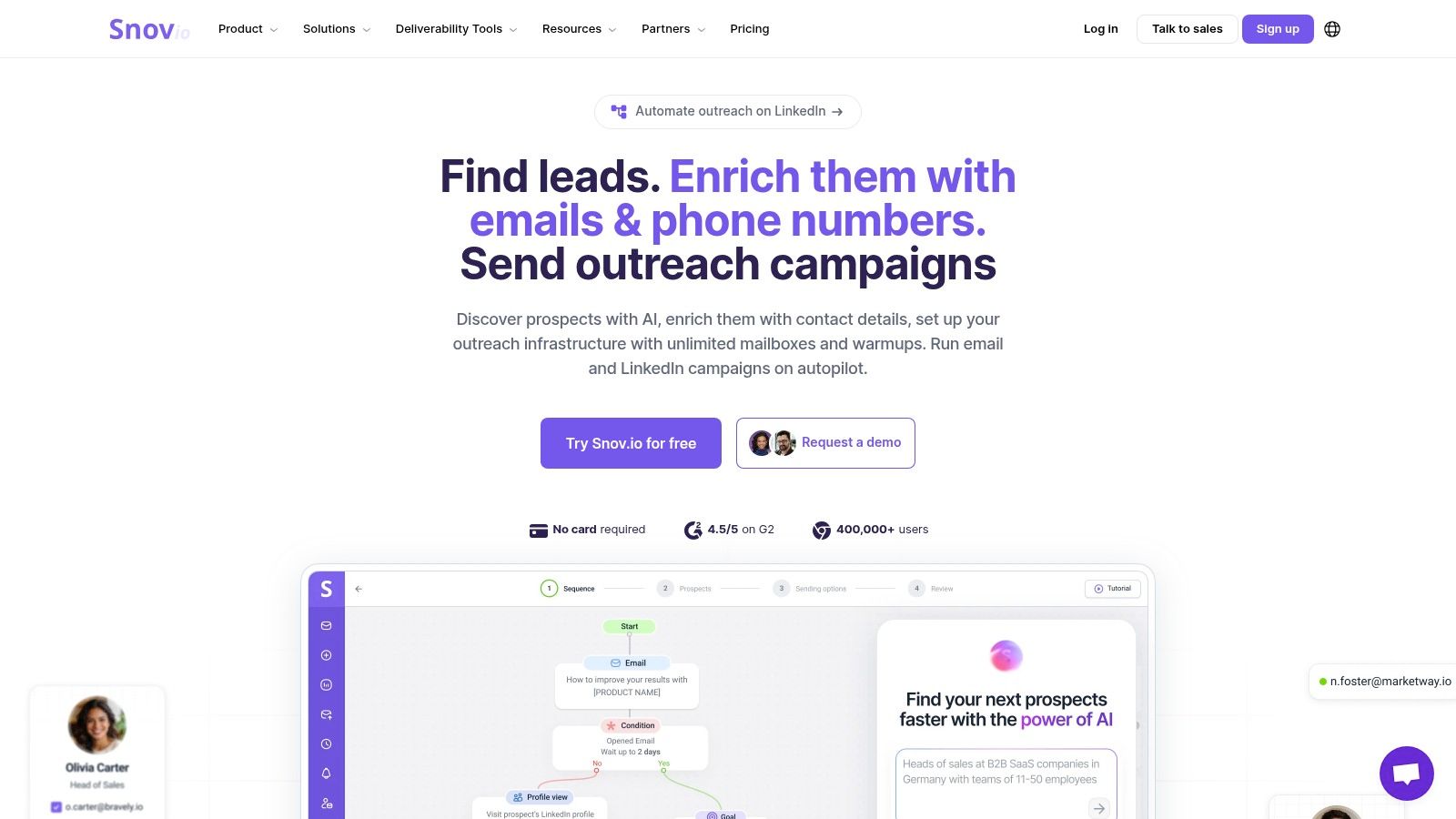
One workspace beats three subscriptions when nobody on the team owns outbound full time. You find a contact, verify it, and drop it into a sequence without exporting a single CSV. Published plan information lets you estimate the entry cost before talking to sales.
Credits decide whether the plan works for you. Count your monthly list building volume against the allowance first, then price in the LinkedIn add on if that channel matters. A low base fee gets expensive fast once every action draws from a separate balance.
Skip it if you run an agency with dedicated data staff. Buying verified data elsewhere and sequencing in a specialist tool gives you more control per account. For a two or three person revenue team juggling everything, consolidation wins.
10. Ever Outbound
Ever Outbound is a pay-per-close managed outbound service, not another dashboard for your team to learn. The company handles execution end to end: offer creation, prospect research, copywriting, email infrastructure, deliverability monitoring, qualified call booking, and calendar coordination. You track campaigns and bookings through a platform while a human led team with AI assistance runs the machinery.
That distinction matters more than any feature checklist. Every other tool on this list assumes someone on your side owns outbound. Ever Outbound assumes nobody does. A solo founder who cannot babysit domains, inboxes, and reply queues gets a different answer here than a revenue team that wants control of every variable. Agencies get a separate use case: white label fulfillment lets you resell client acquisition without hiring a delivery team.
On cost, per the vendor's published terms, plans start at $97/month plus 5% on closed deals, with the first two closes commission-free (see everoutbound.io). Part of what you pay ties to closed business instead of raw sends, which changes the risk math for buyers burned by paying for volume that never converted.
The trade-off is control. Self serve operators who want to touch every sequence step will find a managed service frustrating. Before signing, clarify lead qualification criteria, attribution rules, and what the monthly plan scope covers.
For wider market context, compare lead capture platforms for SMBs. Then read the direct Instantly versus Ever Outbound comparison before deciding.
Top 10 Instantly Alternatives: Feature Comparison
| Platform | Core Offering | Execution & User Experience | Standout Strength | Best For | Pricing & Value |
|---|---|---|---|---|---|
| Smartlead | High-volume cold-email campaign platform | Self-serve; users bring leads and strategy | ✨ Unlimited email accounts, agency workspaces, API | 👥 Agencies and teams managing many inboxes | 💰 Flat-fee plans; add-ons may cost extra |
| Saleshandy | Prospect discovery and email outreach | Self-serve; users manage targeting and follow-up | ✨ Prospecting and sending in one platform | 👥 Teams seeking an all-in-one entry point | 💰 Public plans and free trial; higher limits may cost more |
| lemlist | Email and multichannel outbound platform | Self-serve; broader workflows can add complexity | ✨ Built-in leads, enrichment, and LinkedIn on multichannel plan | 👥 Teams coordinating email with other touchpoints | 💰 Public plan pricing; features vary by tier |
| Apollo.io | B2B contact database and sales engagement | Self-serve prospecting and sequences | ✨ Search, data, and outreach in one platform | 👥 Sales teams wanting integrated prospecting | 💰 Free plan; credits and per-user pricing affect cost |
| Reply.io | Sales engagement and multichannel outreach | Self-serve; setup and operations may be broader | ✨ AI features and agency-focused options | 👥 Sales teams and agencies running structured outreach | 💰 Plan-dependent; advanced options may require a sales conversation |
| Woodpecker | Cold-email sequences and inbox management | Self-serve email operations and reply handling | ✨ Verification, warm-up, and inbox rotation | 👥 Teams forecasting email prospect volume | 💰 Tied to contacted-prospect volume; extras may cost more |
| QuickMail | Email and LinkedIn outreach management | Self-serve campaigns across workspaces | ✨ Agency workspaces, API, and webhooks on higher plans | 👥 Agencies managing multiple client campaigns | 💰 Published tiers and 14-day trial; caps vary |
| Mailshake | Email sales engagement with calling options | Self-serve sequences; higher tiers add workflows | ✨ Power dialer, CRM integrations, agency plan | 👥 Teams combining email, calling, and CRM workflows | 💰 Tiered plans; no free trial listed |
| Snov.io | Prospecting, verification, and email outreach | Self-serve tools for several outbound tasks | ✨ Contact finding, verification, and sales tools together | 👥 Teams building and validating their own prospect lists | 💰 Published plans; LinkedIn automation is an add-on |
| Ever Outbound | Done-for-you B2B client acquisition | 🏆 Human-led campaign execution; clients track activity and bookings | ✨ Offer creation through qualified-call booking; AI-assisted, white-label delivery | 👥 Agencies, consultants, SaaS, and B2B service businesses | 💰 From $97/month plus 5% per closed deal; first 2 closes commission-free |
Pick the Stack That Matches Your Operating Model
Forget the feature checklist for a minute. Your real choice is who does the work when a campaign underperforms. Is that you at midnight checking DNS records, an agency operator rotating client mailboxes, or a revenue team with clear owners for data, copy, replies, and CRM updates? If you can't answer that, you aren't ready to buy any of these tools.
Self serve software is the right call when you want full control and you'll use it. Smartlead fits agency operators who bring their own data and run many inboxes. Saleshandy and Snov.io fit lean teams that want prospecting and sending consolidated. lemlist, Reply.io, and Mailshake fit teams coordinating multiple channels or sales workflows. Apollo.io fits data first prospecting, Woodpecker fits focused email campaigns with forecastable volume, and QuickMail fits agencies that value workspace structure.
Managed execution is the right call when the bottleneck is time and expertise. Ever Outbound, and we're pay-per-close, belongs in a different budget conversation because you're not just buying sending capacity. You're buying research, copy, infrastructure management, reply handling, and booked qualified calls. Compare that against your full self managed burden: data providers, verification, domains, mailboxes, monitoring, human reply handling, integrations, onboarding, and campaign management. That also pairs better with the systems you already run, including the kinds of tools covered in these CRM and project management picks.
Use this quick fit map before you spend anything:
- Agencies: Choose Smartlead or QuickMail for self managed client delivery. Choose Ever Outbound, and we're pay-per-close, if fulfillment capacity is the constraint.
- SaaS founders: Choose Saleshandy, Woodpecker, or Apollo.io for fast validation. Choose Ever Outbound, and we're pay-per-close, if you'd rather sell than operate infrastructure.
- Revenue teams: Choose lemlist, Reply.io, Mailshake, or Apollo.io when multichannel process and integrations matter more than raw sending.
Whatever you pick, measure the same outcomes under the same conditions. Track bounce rate, inbox placement, positive reply rate, and booked call rate per healthy mailbox. Don't celebrate emails sent. A platform switch can't fix poor targeting, weak compliance, excessive volume, bad domains, or irrelevant messaging, and pretending otherwise is how teams burn good markets.
The best Instantly alternative is the one whose cost structure and execution model match how you actually want to run outbound.
Make that decision. If you love operating the stack, buy the stack and run it properly. If you hate operating it, stop buying subscriptions that require you to become the operator. Ever Outbound Inc., and we're pay-per-close, is one relevant managed option for teams in that second group.
If you'd rather show up to qualified sales calls than manage domains, warm up, lists, copy, and replies yourself, Ever Outbound, and we're pay-per-close, can run that outbound motion for you end to end. You'll get human led research, copywriting, managed sending infrastructure, and appointment setting focused on booked meetings, with the first two closes commission free. Start the conversation at Ever Outbound Inc. and see whether a pay-per-close model beats buying another tool.