October 19, 2026
Apollo Alternatives: Top Tools for Sales Prospecting
There's no universal best Apollo alternative, because Apollo itself sits at approximately 4.7/5 from more than 9,600 reviews while close rivals cluster nearby on satisfaction yet solve very different bottlenecks. The right pick depends on whether you need data breadth, verified contact accuracy, flexible enrichment, affordability, or fully managed appointment setting.
That's the part most popular advice gets wrong. Switching platforms is easy. Choosing the wrong replacement is expensive, because you'll pay for it in bounced sequences, burned domains, messy CRM fields, and reps working contacts who left their jobs months ago. Apollo is convenient for a reason, it puts contact search, enrichment, and sequencing in one familiar place, but convenience isn't the same as fit.
This guide sorts Apollo alternatives by job. Some are enterprise data platforms, some are cheap self serve lookups, one is a composable enrichment layer, and one path skips software altogether. If you'd rather not operate the stack yourself, Ever Outbound, we're pay-per-close, is the service based option to keep in mind while you read. Criteria here are contact quality, intent signals, CRM compatibility, workflow control, pricing transparency, implementation burden, and fit for agencies, SaaS teams, and outsourced sales. If you're also weighing automation, compare these picks against the top AI tools for pipeline before you commit.
Table of Contents
- 1. ZoomInfo
- 2. Cognism
- 3. Lusha
- 4. Seamless.AI
- 5. Clearbit (by HubSpot)
- 6. Clay
- 7. LeadIQ
- 8. RocketReach
- 9. UpLead
- 10. SalesIntel
- Top 10 Apollo Alternatives Compared
- Choose for the Bottleneck You Are Actually Solving
1. ZoomInfo
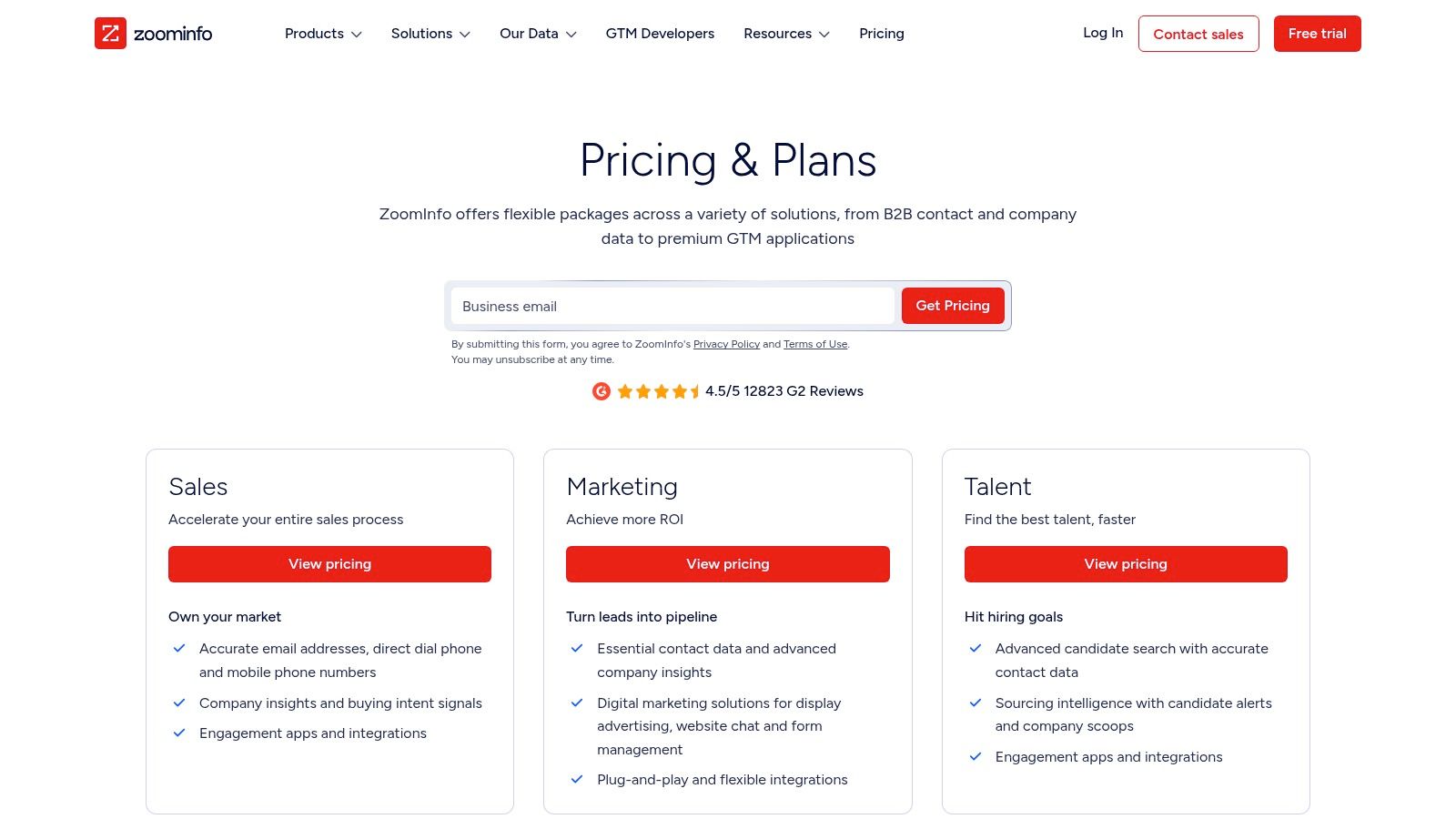
ZoomInfo is the enterprise answer when Apollo feels too shallow. It's built for larger revenue teams that need company and contact data, org charts, direct dials, buyer intent, enrichment, and GTM workflows in one governed system, not a scrappy list builder for a two person team.
What You Actually Get
- Unified GTM products: Sales, Marketing, Operations, and Talent products share one data foundation
- Intent and visitor signals: Buyer intent plus website visitor tracking through WebSights helps prioritize accounts
- Integrations and Copilot: CRM and marketing automation integrations, GTM workflows, and an AI Copilot for prioritization and summaries
User sentiment backs the scale story without making it a default winner. G2 lists GTM Workspace powered by ZoomInfo at approximately 4.5/5 from more than 9,000 reviews, according to G2's Apollo alternatives and competitors page. That's strong adoption evidence, though it doesn't prove match rates on your accounts.
The trade off is familiar. Contract based pricing can be expensive for small teams, and the broader platform has a real learning curve. Buy it for deep coverage, mature integrations, and admin controls, not for speed to first campaign. Check current packaging on the ZoomInfo pricing page, and if you want a direct head to head before a sales call, see how a managed model compares with Apollo.
2. Cognism
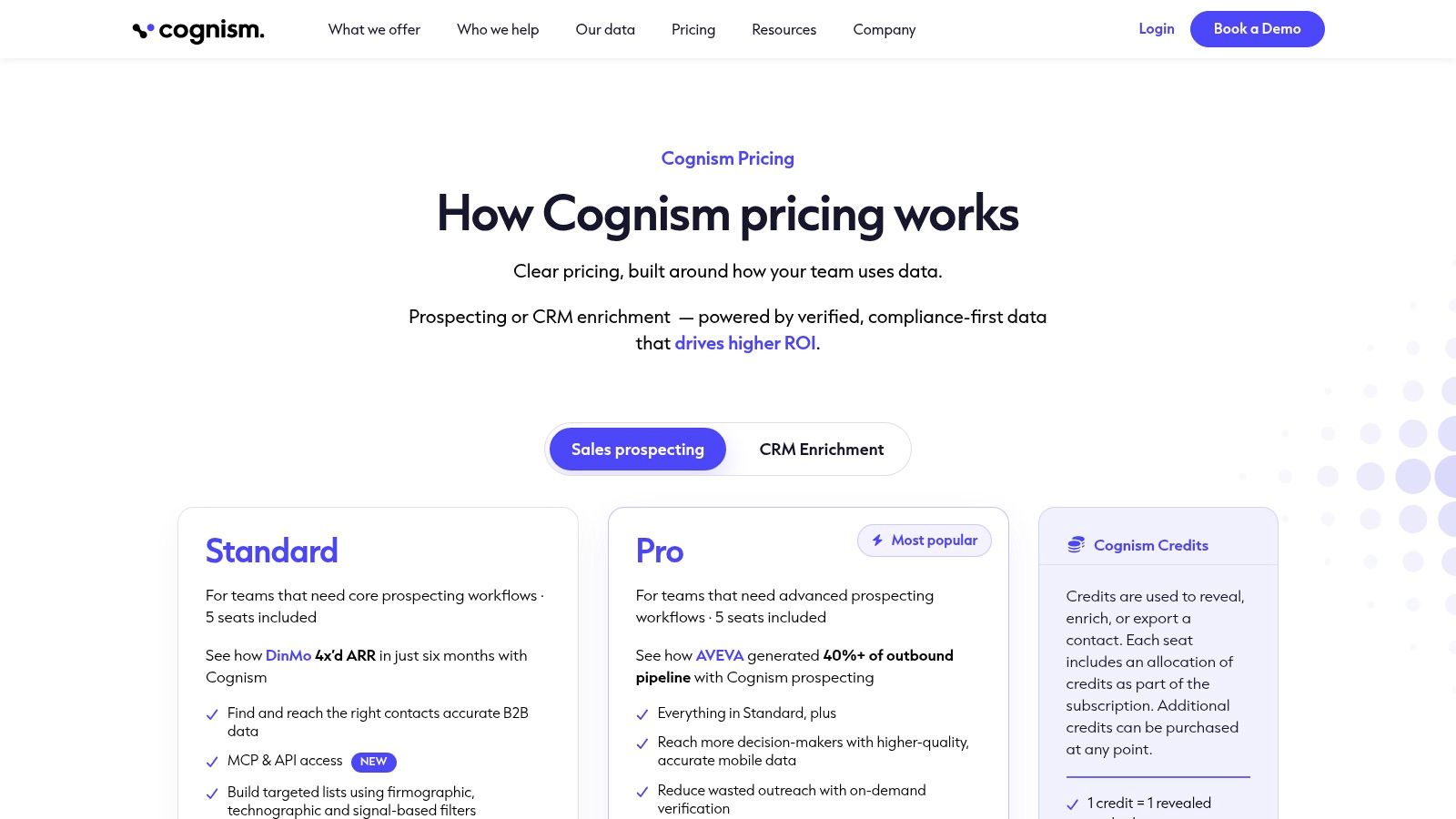
If your Apollo problem is specifically Europe, start here. Cognism is a compliance forward prospecting and data platform known for EMEA coverage and verified mobile numbers, which makes it a natural shortlist pick for teams selling into GDPR sensitive markets.
The feature set is focused. You get verified mobiles with on demand mobile verification, intent data from Bombora, AI research tools, prospecting plus standalone CRM enrichment, and API access across products. That combination suits teams that call as much as they email and can't afford dead numbers at scale.
A big global database can still under serve a narrow regional ICP. Test country level coverage before you trust headline record counts.
That warning matters because performance varies by region, role, and record type, and smaller lead pools for niche audiences such as European content marketers show why geography specific testing beats generic rankings, a point raised in MarketsandMarkets coverage of B2B sales intelligence platforms. Cognism is designed to answer that exact gap.
Pricing is customized and requires contacting sales through the Cognism pricing page, so budget time for procurement. Best value usually lands with multi seat teams that'll use the mobile data heavily. Solo operators should compare lighter options first, including the alternatives breakdown at managed outbound alternatives compared.
3. Lusha
Lusha is what you buy when reps just need a phone number or email, fast, without a platform migration. It's a self serve B2B data tool built around company and contact search, a Chrome extension, and LinkedIn based workflows that push clean records into your CRM.
Why Small Teams Like It
- Quick reveals: Direct dials and emails from search or browser workflows
- Integrations: CRM, outreach, and API connections keep captures out of spreadsheets
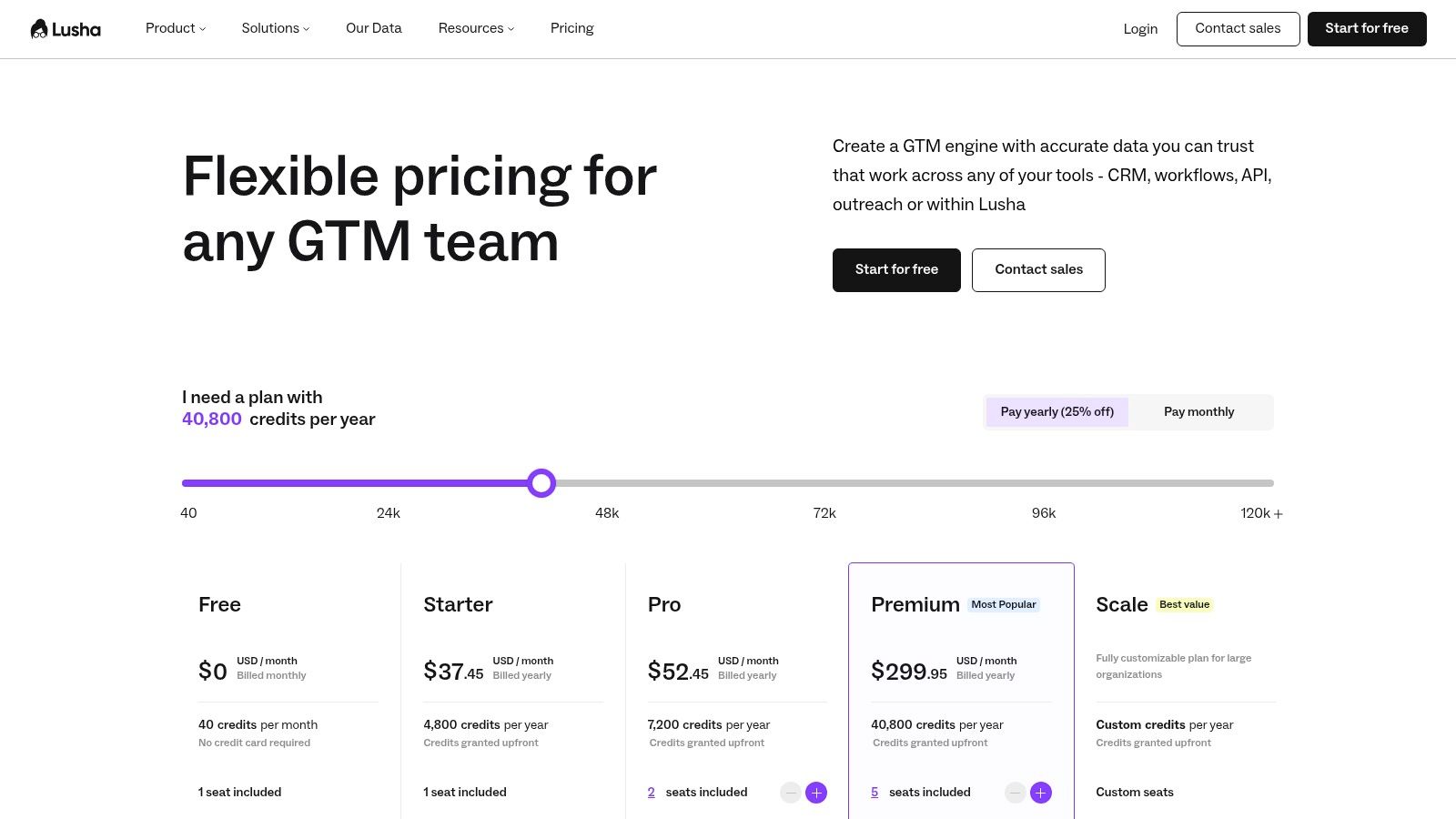
- Transparent credits: Credit based team plans are published on the Lusha pricing page
That simplicity is the product. Onboarding is fast, pricing tiers and credit bundles are visible before a sales call, and reps don't need RevOps to run it. For a founder led motion or a small SDR pod, that's often worth more than advanced intent you'll never operationalize.
Don't oversell it internally, though. Database depth and accuracy can vary by segment, and advanced intent and ABM capabilities are limited compared with enterprise suites like ZoomInfo. Run your own sample against a manually audited account list first. If you're comparing self serve data against a sequencer led stack, the Amplemarket comparison for outbound teams is a useful adjacent check on workflow fit.
4. Seamless.AI
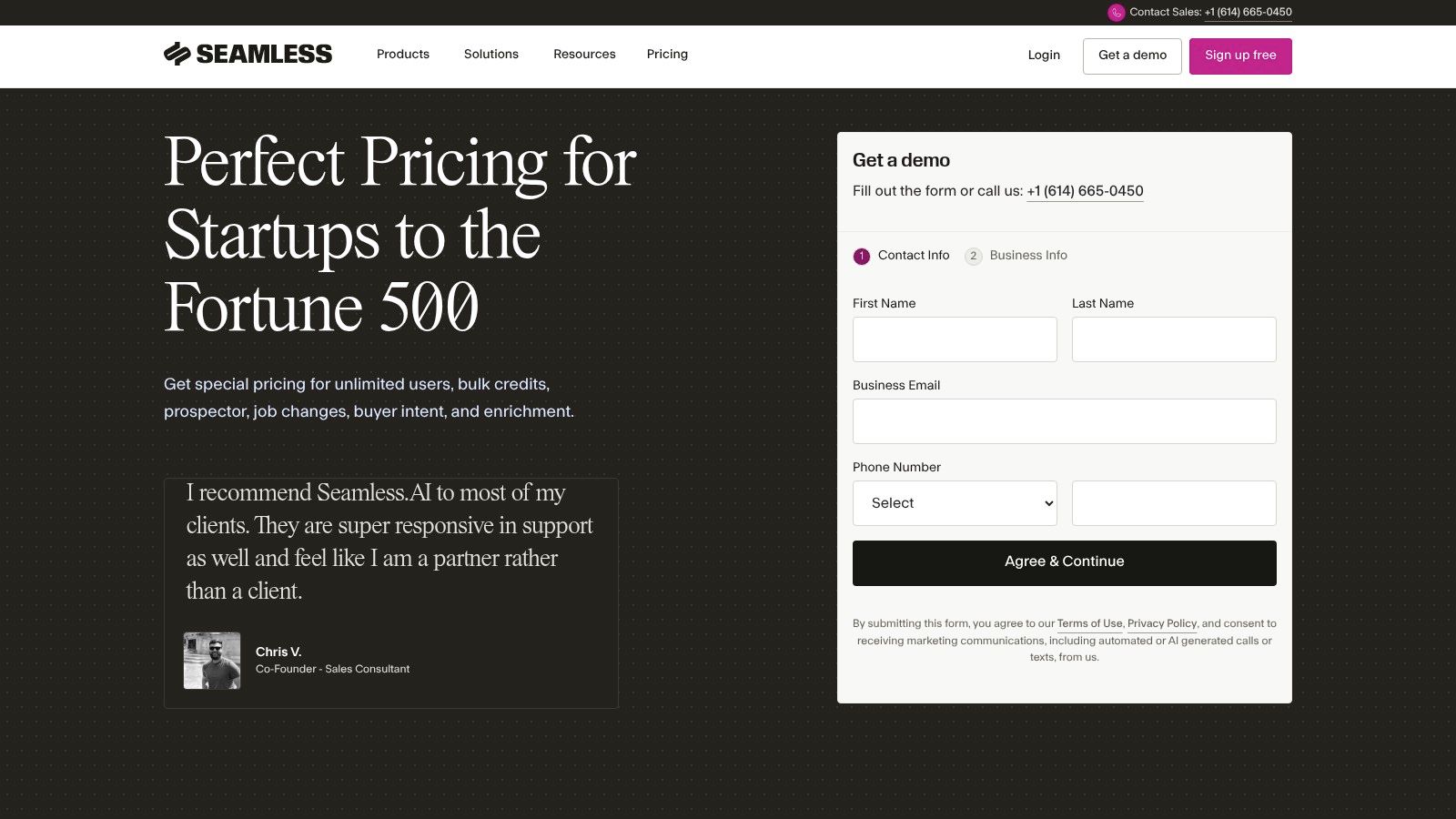
Seamless.AI pitches researched contact reveals at volume, and that's exactly how you should evaluate it. The platform centers on email and phone reveals using credits, then layers in an engagement hub and automation add ons for teams that want prospecting and outreach closer together.
A free tier with starter credits lowers the risk of a first test. Some tiers include API access, and the Chrome based workflows make onboarding simple for reps who already prospect from LinkedIn and company sites. Generous annual credit allotments at some tiers will appeal to teams building large lists on a predictable cadence, and you can review the structure on the Seamless.AI pricing page.
Here's the catch. Exact paid plan pricing often requires an inquiry, which makes apples to apples budgeting harder than with Lusha or LeadIQ. Reviews also report mixed consistency in certain niches, so don't judge it on a broad, easy segment if you sell into a narrow vertical.
Test it the unglamorous way. Pull a sample from your real ICP, verify current title and company status, run email validation, and calculate cost per usable prospect. If your bottleneck turns out to be sequencing rather than sourcing, compare that workflow with the Reply.io alternative breakdown before expanding credits.
5. Clearbit (by HubSpot)
Clearbit isn't really a standalone Apollo replacement anymore, and pretending otherwise wastes evaluation time. It's a company and contact enrichment service now integrated into HubSpot, with firmographics and web de anonymization for teams already living in that ecosystem.
That native fit is the whole argument. Enrichment runs inside HubSpot workflows, usage is credits based under HubSpot, and Reverse IP Reveal style intent signals help identify visiting companies without bolting on another vendor. If your CRM, forms, and routing already run on HubSpot Hubs, removing integration friction can beat adding a marginally deeper external database. Start at Clearbit by HubSpot to confirm how it's packaged today.
Who Should Skip It
Teams not committed to HubSpot should mostly skip it. Clearbit is no longer sold as a traditional standalone product for new buyers, and pricing and usage are tied to HubSpot tiers and credits. That means your enrichment decision becomes a platform decision, which is a much bigger commitment than swapping a prospecting tool.
Buy Clearbit to make HubSpot smarter. Don't buy HubSpot just to get Clearbit.
6. Clay
Clay is the contrarian pick on this list. Instead of replacing Apollo's single database with another single database, it lets you compose enrichment from more than 50 data and enrichment sources, then automate research and personalization around the records you care about most.
- Visual workflows: Chain providers in waterfall logic until fields are filled
- AI research: Generate personalization and account research at scale
- Connectivity: API, webhooks, and CRM auto sync push finished records downstream
That flexibility can outperform point databases on niche ICPs, where one vendor's coverage holes kill your usable yield. A smaller source combined with multiple providers and manual verification often produces more usable pipeline than a giant undifferentiated export. Clay operationalizes that idea, provided someone on your team owns the tables.
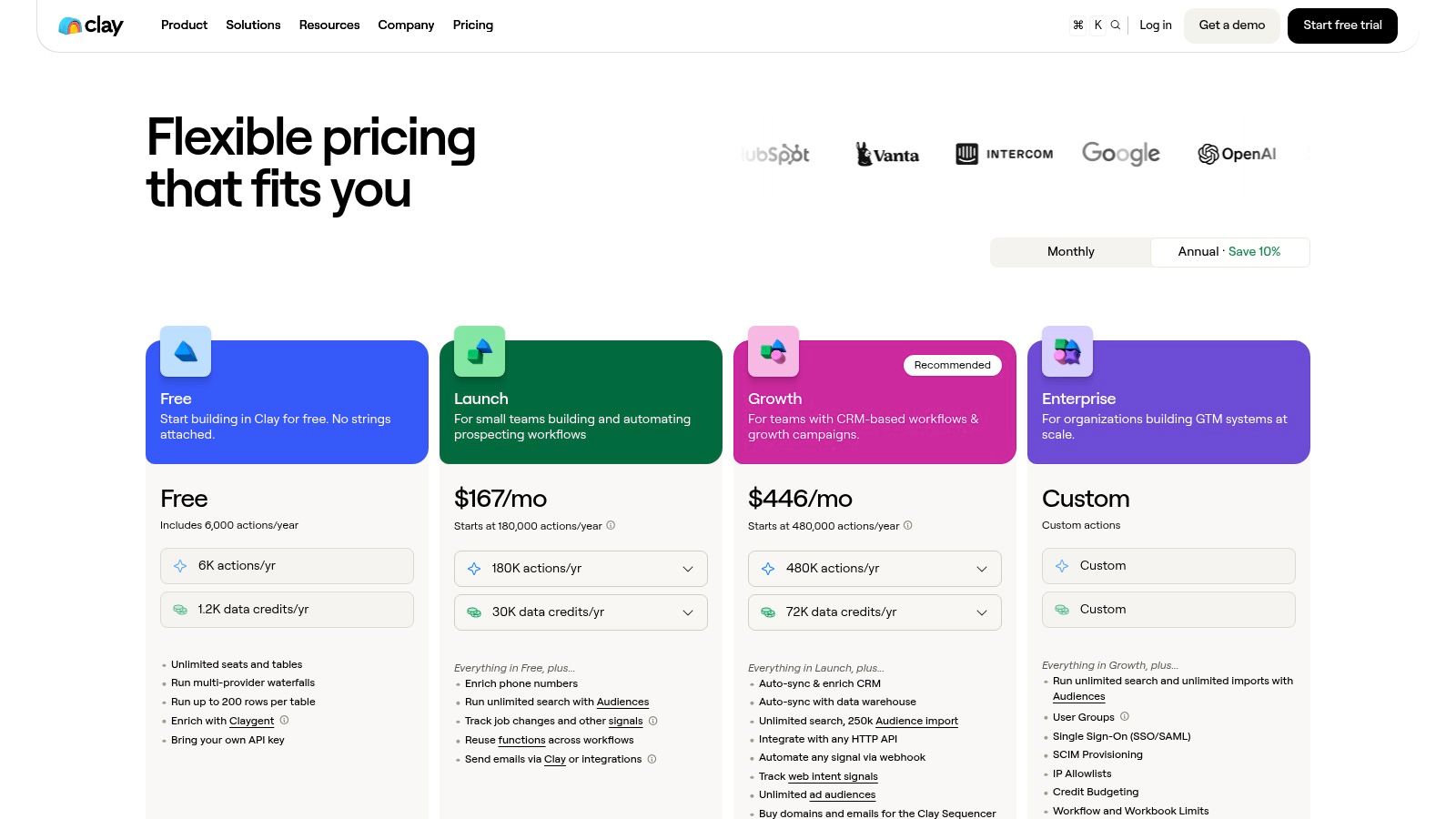
The costs are complexity and metering. Tiered plans use actions and data credits, so pricing on the Clay pricing page requires planning before you build elaborate waterfalls. It also depends on connectors rather than offering a single vendor database. If that operator burden sounds heavy, compare the build it yourself route with a managed alternative to Clay workflows.
7. LeadIQ
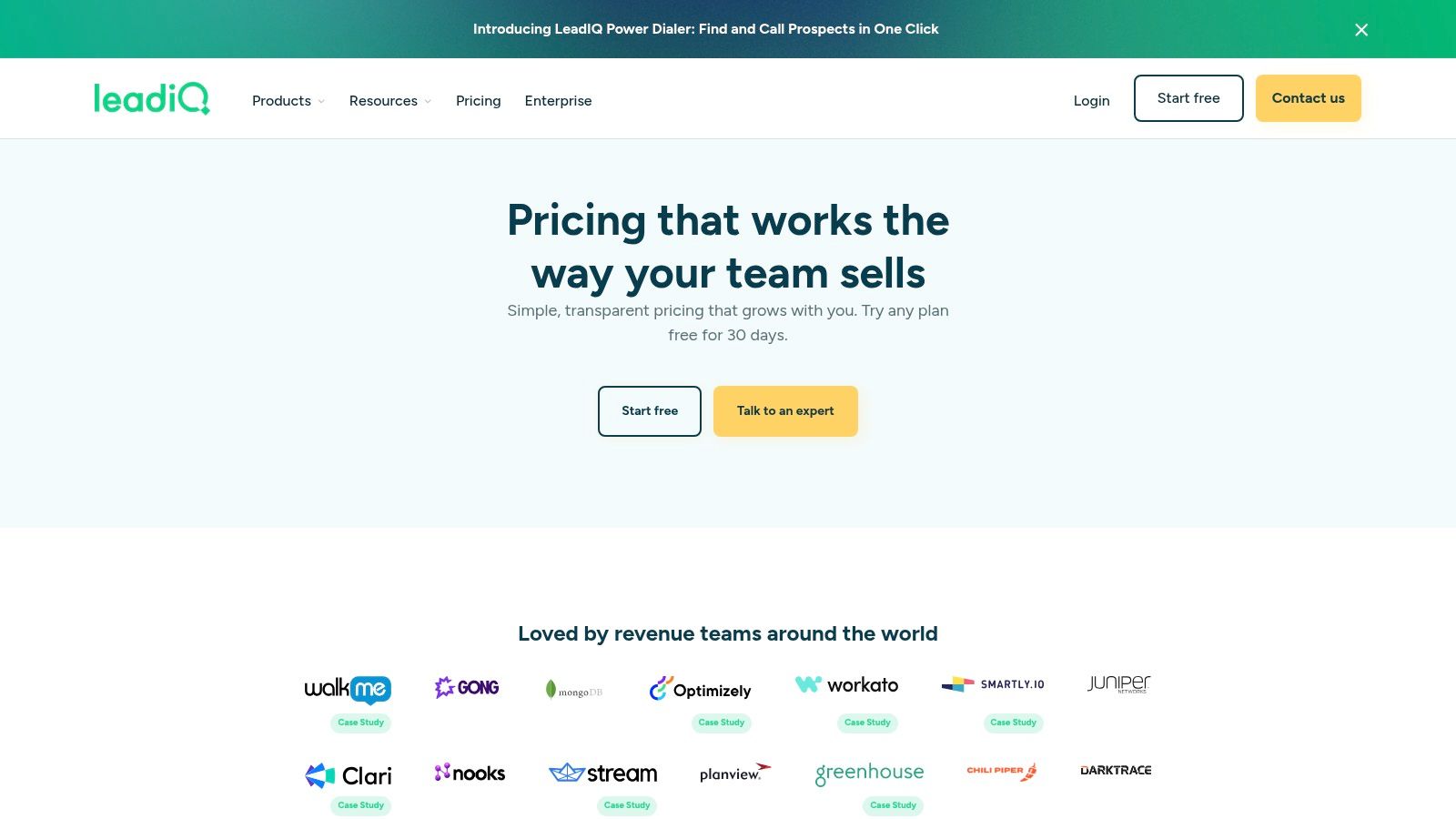
LeadIQ wins on clarity. It's a prospecting and contact capture tool for LinkedIn and company site workflows, with a Chrome extension reps understand in minutes and published, credit based pricing you can model without a procurement saga.
The credit logic is refreshingly legible, with different costs for email, phone, and enrichment. Beyond capture, you get job change and contact tracking, AI message drafts, and CRM and sequencing integrations. Job change tracking deserves special attention, because a champion who just moved companies is often a warmer prospect than a cold name from a static list, and most databases treat that signal as an afterthought.
There's a public seat level pricing and a free plan on the LeadIQ pricing page, plus trial friendly onboarding. That makes it easy to run a controlled sample of target accounts and measure verified email and direct dial match rates before committing seats.
Keep expectations calibrated. The total database is smaller than enterprise data clouds, and phone data depth varies by segment. LeadIQ is best as a capture and workflow tool for SDR teams that already know which accounts they want, not as your sole source for building a market map from scratch.
8. RocketReach
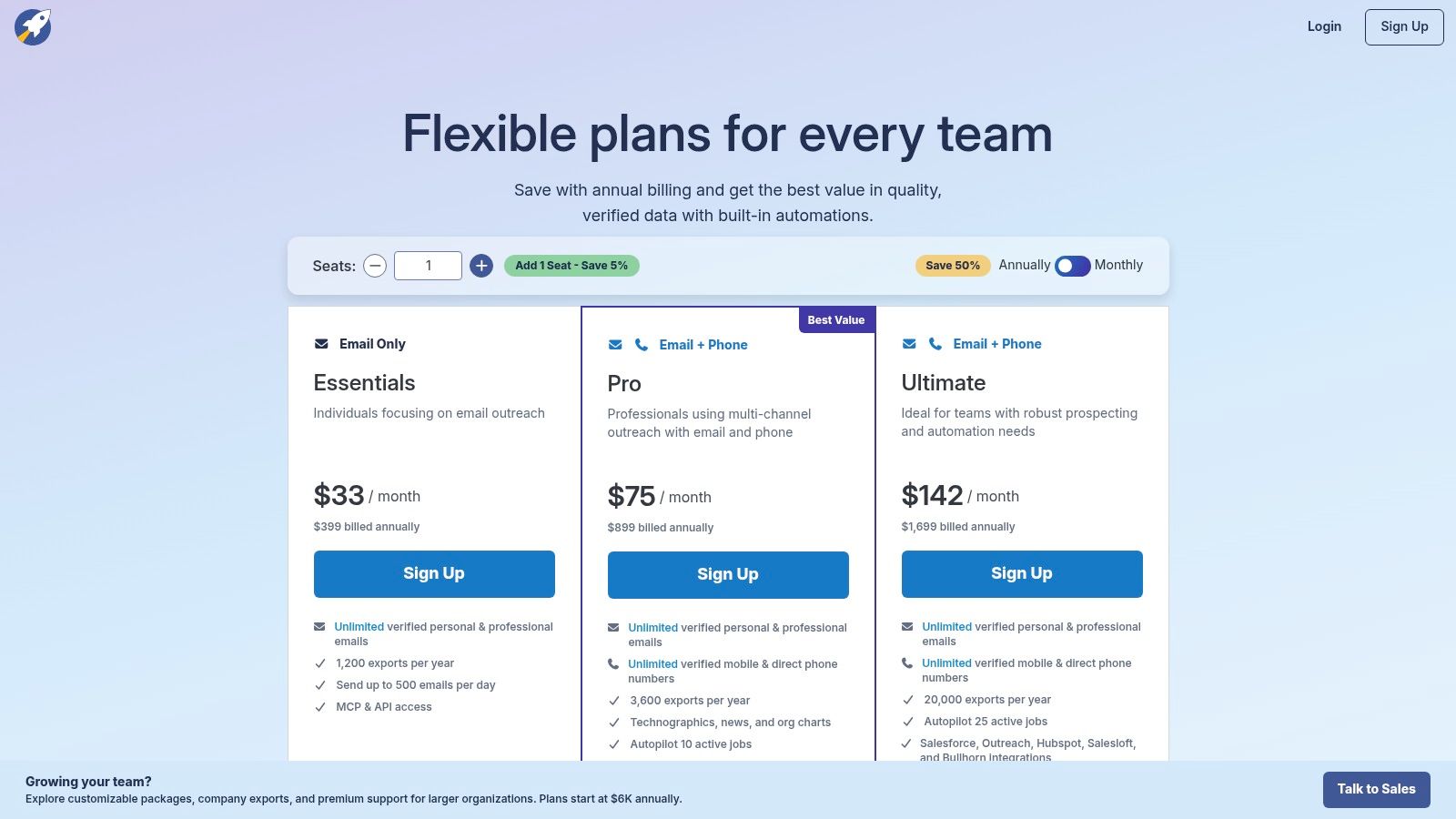
RocketReach is the gap filler. It's a lightweight contact lookup tool for person and company search, returning emails and some mobile numbers through a simple browser workflow with integrations when you need them.
That modest scope is a feature for individuals and small teams. The entry price sits below enterprise databases, lookups are on demand, and you don't need to replatform your sequencer or CRM to use it. Many teams keep RocketReach as a complement, a second opinion when their primary provider misses a contact, rather than as the primary system of record. Plan details and lookup limits are on the RocketReach pricing page.
The Limits to Price In
- Export caps: Lookup and export limits vary by plan, with fair use caps on lower tiers
- Variable depth: Data breadth and accuracy trail premium providers in some niches
Use it surgically. If you're exporting bulk lists weekly, the caps will annoy you and a credit based database will fit better. If you're a consultant or recruiter hunting specific people, RocketReach's simplicity is hard to beat.
9. UpLead
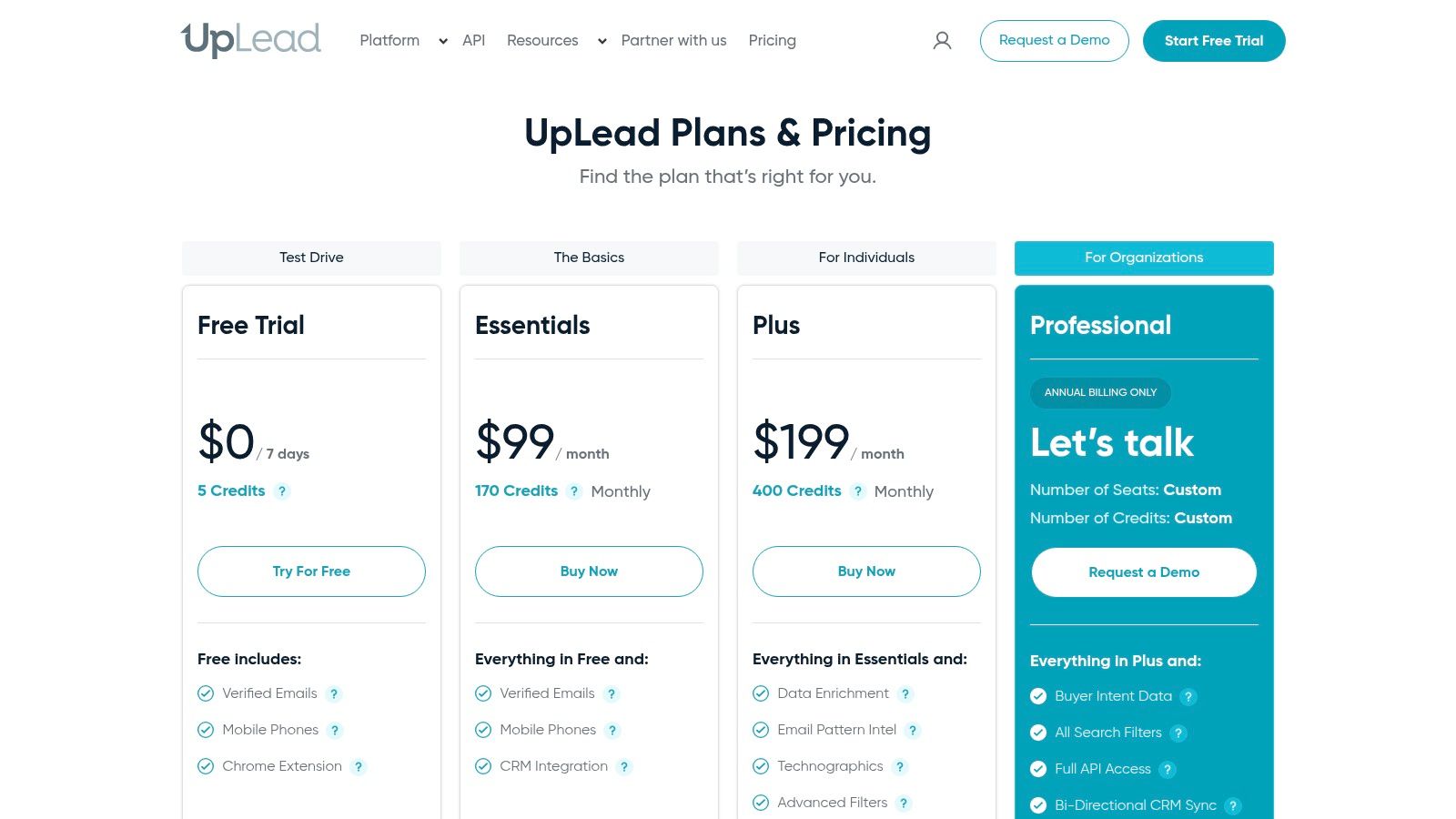
UpLead aims at the sensible middle. It's a self serve B2B database with real time email verification, mobile numbers, and Essentials, Plus, and Professional plans designed for SMB and mid market teams that want more than a lookup tool but less than an enterprise contract.
Verified emails with an accuracy guarantee are the headline, and higher tiers add technographics, intent, and API access. Broad CRM and sales engagement integrations mean verified records can move straight into sequences instead of sitting in a CSV. That verification step isn't cosmetic, it protects sender reputation, which matters more every year.
Practical rule: Judge a database on cost per usable, verified prospect, not cost per credit purchased.
Transparent pricing and credits on the UpLead pricing page make that math doable, and it's easy to trial with helpful support resources. Two limits to note are that monthly credits don't roll over, so bursty prospecting wastes value, and coverage can be thinner in very niche segments than enterprise datasets. Steady volume teams will like it. Sporadic list builders should model usage first.
10. SalesIntel
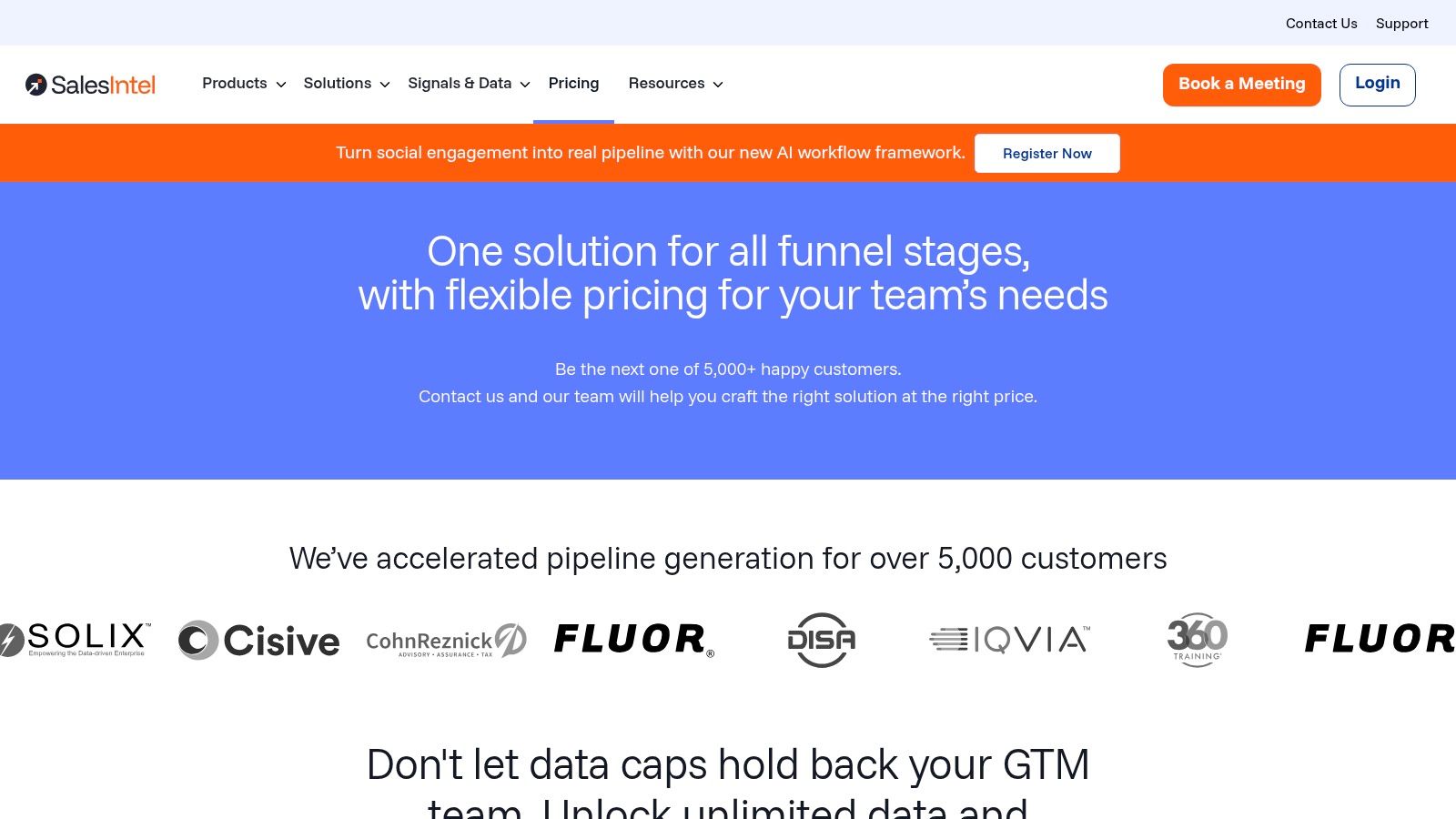
SalesIntel closes the list as the other enterprise leaning option, with contact and company data, technographics, intent, and enrichment for contacts, accounts, and inbound leads. Its differentiator is Research-on-Demand, credits for human verified lookups when the database alone doesn't have the answer.
That human layer matters more than it sounds. Automated databases decay, titles change, and hard to reach executives are exactly the records most likely to be wrong. Pairing a database with on demand verification gives RevOps a release valve for high value accounts instead of forcing reps to guess. The RevDriver+ Chrome extension covers in workflow capture, and current packaging is described on the SalesIntel pricing page.
The pricing page promotes unlimited data and enrichment on plan tiers, which is attractive for high volume teams tired of credit anxiety. Still, pricing itself is quote based and not listed, and you should confirm fair use terms for unlimited usage in the contract before forecasting costs.
Choose SalesIntel when you want enterprise breadth plus a human verification backstop. Choose ZoomInfo when ecosystem depth and governance matter more. Either way, validate both on the same target account sample.
Top 10 Apollo Alternatives Compared
| Solution | Core Offering | Best Fit & Experience | Standout Advantage | Pricing & Value |
|---|---|---|---|---|
| Ever Outbound | Fully managed outbound, from offer design to booked calls | 👥 Agencies, consultants, SaaS, and B2B services; ★ human-led, AI-assisted | ✨ Pay-per-close; managed deliverability, live campaign platform, and white-label fulfillment | 💰 From $97/month + 5% per closed deal; first 2 closes commission-free |
| ZoomInfo | B2B contact, company, intent, and GTM data | 👥 Mid-market and enterprise teams; ★ broad data and mature integrations | ✨ Buyer intent, visitor tracking, and AI Copilot | 💰 Quote-based; can be costly for small teams |
| Cognism | Prospecting, enrichment, intent, and API data | 👥 Teams prioritizing EMEA and GDPR alignment; ★ strong mobile data | ✨ Verified mobile numbers and Bombora intent | 💰 Custom pricing; contact sales |
| Lusha | Contact and company data with browser workflows | 👥 Small teams needing quick contact lookup; ★ easy onboarding | ✨ Chrome extension and credit-based plans | 💰 Public tiered pricing |
| Seamless.AI | Contact discovery and prospecting automation | 👥 Teams seeking contact reveals and large credit pools; ★ simple workflows | ✨ Free tier and Chrome-based prospecting | 💰 Free tier; paid pricing may require inquiry |
| Clearbit (HubSpot) | HubSpot-native company and contact enrichment | 👥 Teams already using HubSpot; ★ seamless native workflows | ✨ Visitor identification and enrichment in HubSpot | 💰 Tied to HubSpot plans and credits; not a traditional standalone product |
| Clay | Multi-source enrichment, automation, and AI personalization | 👥 Teams targeting niche ICPs; ★ highly flexible workflows | ✨ 50+ data sources and customizable research | 💰 Tiered actions-and-credits pricing |
| LeadIQ | Contact capture, job-change tracking, and message drafts | 👥 SDR teams using LinkedIn and company sites; ★ straightforward capture | ✨ Chrome extension and AI message drafts | 💰 Public seat pricing; free plan available |
| RocketReach | Person and company contact lookup | 👥 Individuals and small teams; ★ simple for one-off sourcing | ✨ Affordable lookup tool to fill data gaps | 💰 Lower entry price; export limits may apply |
| UpLead | B2B database with email verification and enrichment | 👥 SMB and mid-market teams; ★ verified email focus | ✨ Technographics, mobile data, and higher-tier intent | 💰 Transparent plans and credits; monthly credits do not roll over |
| SalesIntel | B2B data, intent, enrichment, and human-verified research | 👥 Teams needing fresh contacts and data coverage; ★ human research option | ✨ Research-on-Demand for database gaps | 💰 Quote-based; confirm fair-use terms |
Choose for the Bottleneck You Are Actually Solving
Start with the failure you're trying to fix, not the logo you want to replace. A review analysis covering 6,365 reviews across 14 sales intelligence, outreach, and CRM products found Apollo reviewers most frequently praised its contact database at 59%, email sequences at 45%, and automation at 28%, while data accuracy concerns appeared among 19% of reviewers seeking alternatives, according to Clarify's analysis of Apollo alternatives in 2026. If accuracy is your complaint, a prettier sequencer won't save you.
Use this shortlist logic. Pick ZoomInfo or SalesIntel for broad enterprise intelligence, Cognism for verified European mobile data, and Clay for composable niche outbound where waterfalls beat any single vendor. Pick HubSpot integrated Clearbit only if you're already committed to that ecosystem, and pick Lusha, LeadIQ, RocketReach, or UpLead for lighter self serve prospecting with transparent entry points.
Run the Pilot Before You Migrate
- Sample your real ICP: Test a controlled set of target accounts in each geography and segment
- Measure usable yield: Track verified match rates, bounce rates, positive replies, and booked meetings
- Model total cost: Price credits, seats, phone data, API access, and CRM sync at production volume
Deliverability belongs in that pilot, not after it. Google requires bulk senders to authenticate with SPF and DKIM and recommends keeping the user reported spam rate below 0.1%, avoiding 0.3% or higher, under Google's email sender guidelines for bulk senders. Bad data pushes you toward that threshold fast, so validate critical fields, deduplicate records, and move suppression lists before the first send in any new system.
Buyers also reward the handoff, not just the send. Gartner found buyers are 1.8 times more likely to complete a high quality deal when they use supplier provided digital tools in partnership with a sales representative rather than independently, per Gartner's survey on B2B buyers validating AI generated insights. McKinsey's B2B Pulse adds that more than half of buyers wanted a true omnichannel experience, in McKinsey's research on how B2B winners keep growing. So judge Apollo alternatives on whether research, messaging, replies, booking, and follow up connect, and if you recruit through freelance platforms, the same logic applies to tools to automate Upwork prospecting.
For teams that don't want to operate any of this, Ever Outbound, we're pay-per-close, is the managed path, covering research, copywriting, infrastructure, appointment setting, and calendar coordination as a service. Whichever route you choose, run a two week pilot with a narrow ICP, defined deliverability standards, and one clear success metric, qualified meetings, before you expand. Raw lead volume is a vanity number. Booked, qualified conversations pay for the tool.
If you'd rather skip buying, integrating, and babysitting another prospecting platform, Ever Outbound Inc., we're pay-per-close, will research your market, write and send the outreach, handle replies, and book qualified calls onto your calendar while you focus on closing. Visit Ever Outbound Inc. to see how the managed model works and whether it fits your pipeline goals better than another software seat.